How to Manage Buckthorn Without Herbicide
Invasive buckthorn is notoriously difficult to manage. The two invasive species in North America, common buckthorn (Rhamnus cathartica) and glossy buckthorn (Frangula alnus), grow quickly to shade out native plants and form dense, impenetrable thickets. If cut and not treated with herbicide, buckthorn stumps will vigorously resprout to create multiple trunks. So, how do you manage buckthorn when you can’t use herbicide?
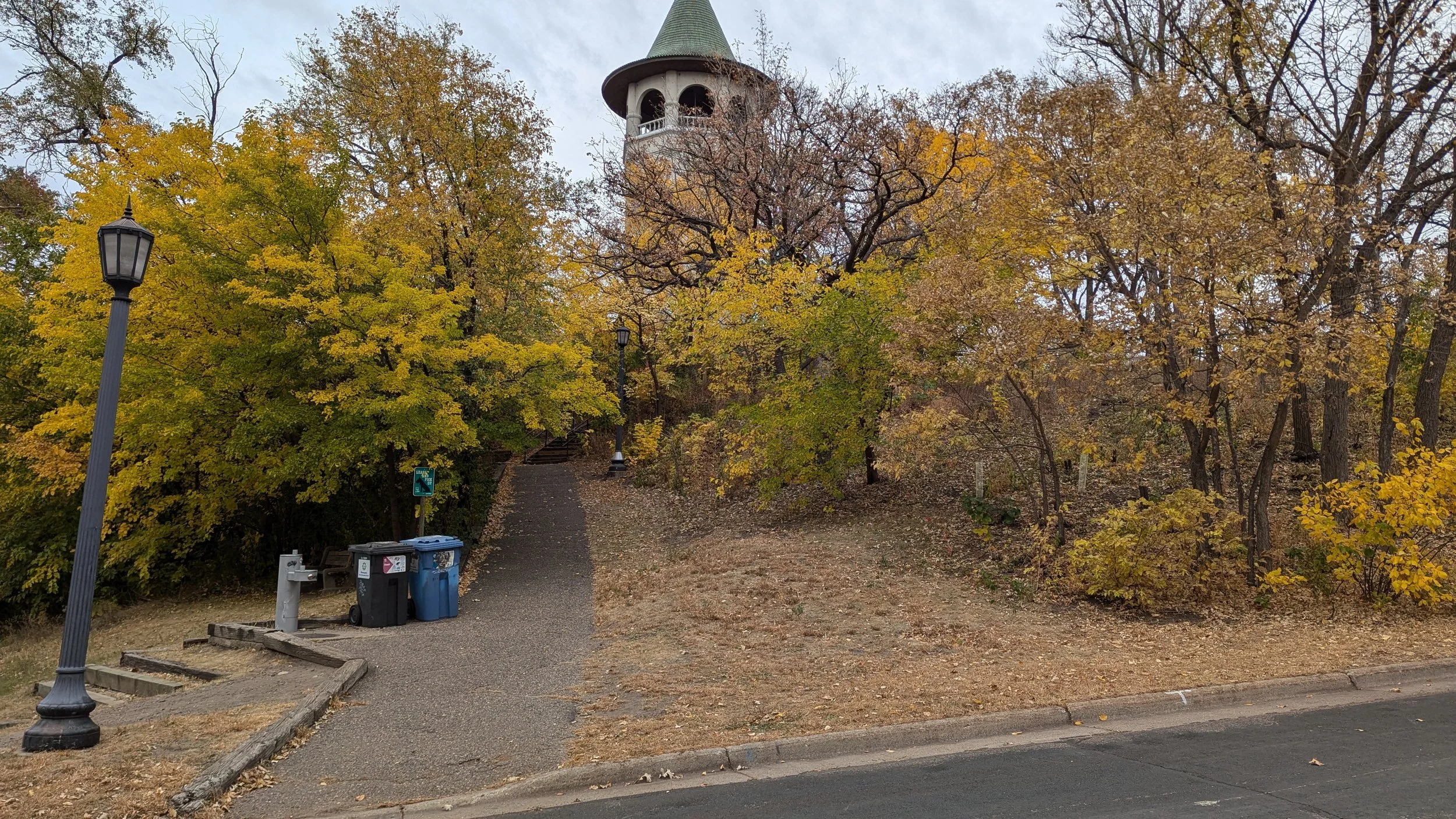
Left of the path, buckthorn darkens the understory. Right of the path, buckthorn is being managed with critical cutting and native plant replacement. This photo, taken in October 2024, shows the progress of a volunteer project after one year of critical period cutting.
Recent research has spotlighted an alternate strategy for managing buckthorn without herbicide. Land managers can replace buckthorn with native plants over several years by pairing critical period cutting (see step one) with specific native plant replacements. This strategy is long and labor-intensive, but it avoids herbicide use while simultaneously restoring habitat. It is ideal for use on smaller buckthorn infestations, like those frequently found on residential properties.
This guide walks you through the steps of managing buckthorn without herbicide. The process is daunting, but you don’t have to go it on your own. Schedule a consultation with Nick’s Natives to get expert help with ecological landscape restoration!
Step 1: Critical period cutting
Critical period cutting is a technique that kills buckthorn without herbicide over a couple years. The “critical cutting” technique is best used on buckthorn trees with stems 1-2” in diameter, and in conjunction with hand pulling. You’ll want to hand pull smaller buckthorn saplings and seedlings, taking care to minimize soil disturbance. Since the critical cutting method is labor-intensive, it’s best reserved for small projects in yards, gardens, and natural areas.
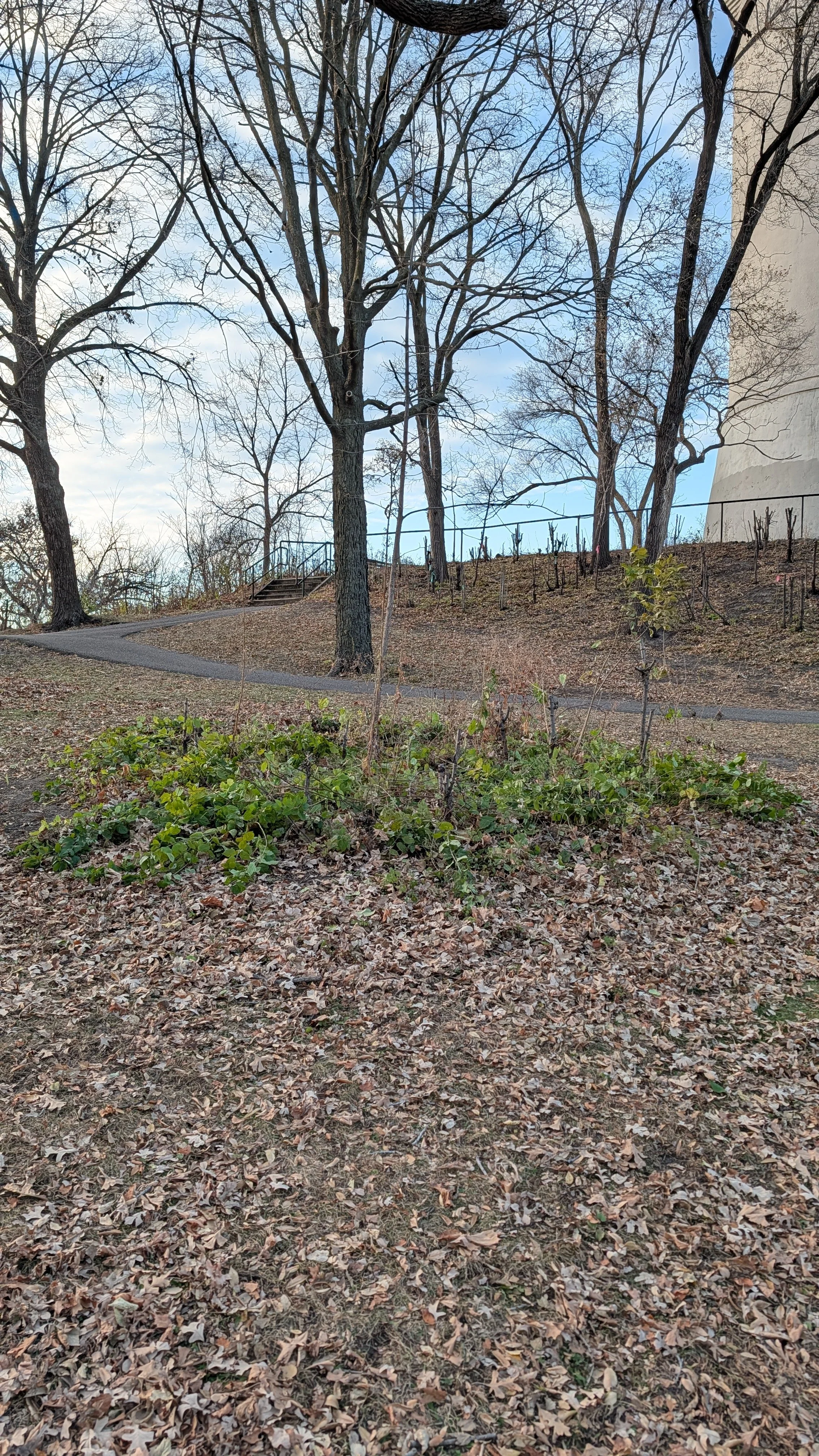
In the foreground, bright green leaves indicate freshly-cut buckthorn branches from stumps. In the background, standing stumps show where volunteers are using critical period cutting to reclaim habitat for native plant species.
Critical cutting isn’t difficult, but it requires time and precision. I’d like to recommend that you follow Friends of the Mississippi River’s guide to critical cutting. Their guide provides an outstanding summary full of visuals to help you put the technique into practice.
Once you’ve completed your first two critical cutting periods (spring and fall), move on to the next step in the process!
Step 2: Near-term native replacements
Buckthorn management always needs to include a plan for near-term and long-term reestablishment of native plants. The Cover It Up! project at the University of Minnesota Extension has conducted extensive research on using native plants to control buckthorn.
Grasses in the Elymus genus are especially important for suppressing buckthorn regrowth. They grow quickly and can form a thatch capable of shading out buckthorn seedlings. Canada wild rye (Elymus canadensis) and Virginia wild rye (Elymus virginiana) can be used in part to full sun conditions. These species germinate easily from seed without needing cold stratification.
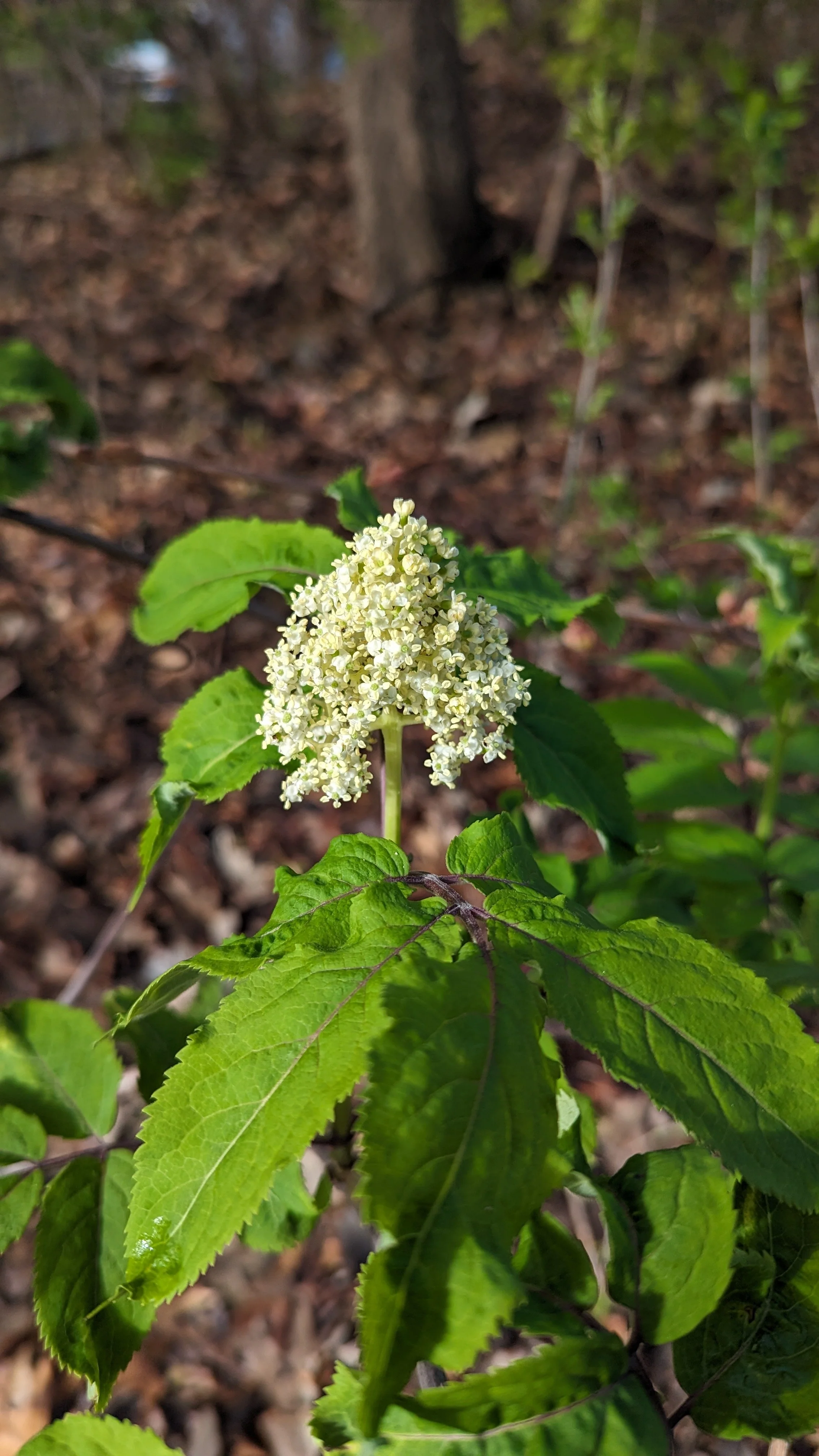
Red elderberry (Sambuca racemosa) is a native shrub that can compete with buckthorn’s biological lifecycle.
For deeper shade, consider seeding bottlebrush grass (Elymus hystrix), which grows quickly in lower light conditions. You can also complement bottlebrush grass with red elderberry (Sambuca racemosa). Red elderberry is a fast-growing native shrub that wakes up early and holds its leaves through autumn, effectively shading out buckthorn. It’s best to plant bare-root or container-grown red elderberry, rather than trying to grow it from seed.
Ruderal, free-seeding forbs are also important for near-term buckthorn replacement. Consider black-eyed Susan (Rudbeckia hirta). This iconic North American wildflower is short-lived but spreads its seeds freely. The fast-growing seedlings compete with buckthorn seedlings for resources, while the flowers provide essential forage for pollinators.
Here are a few other ruderal forbs useful for buckthorn replacement:
Tall bellflower (Campanula americana)
Purple coneflower (Echinacea purpurea)
Early sunflower (Heliopsis helianthoides)
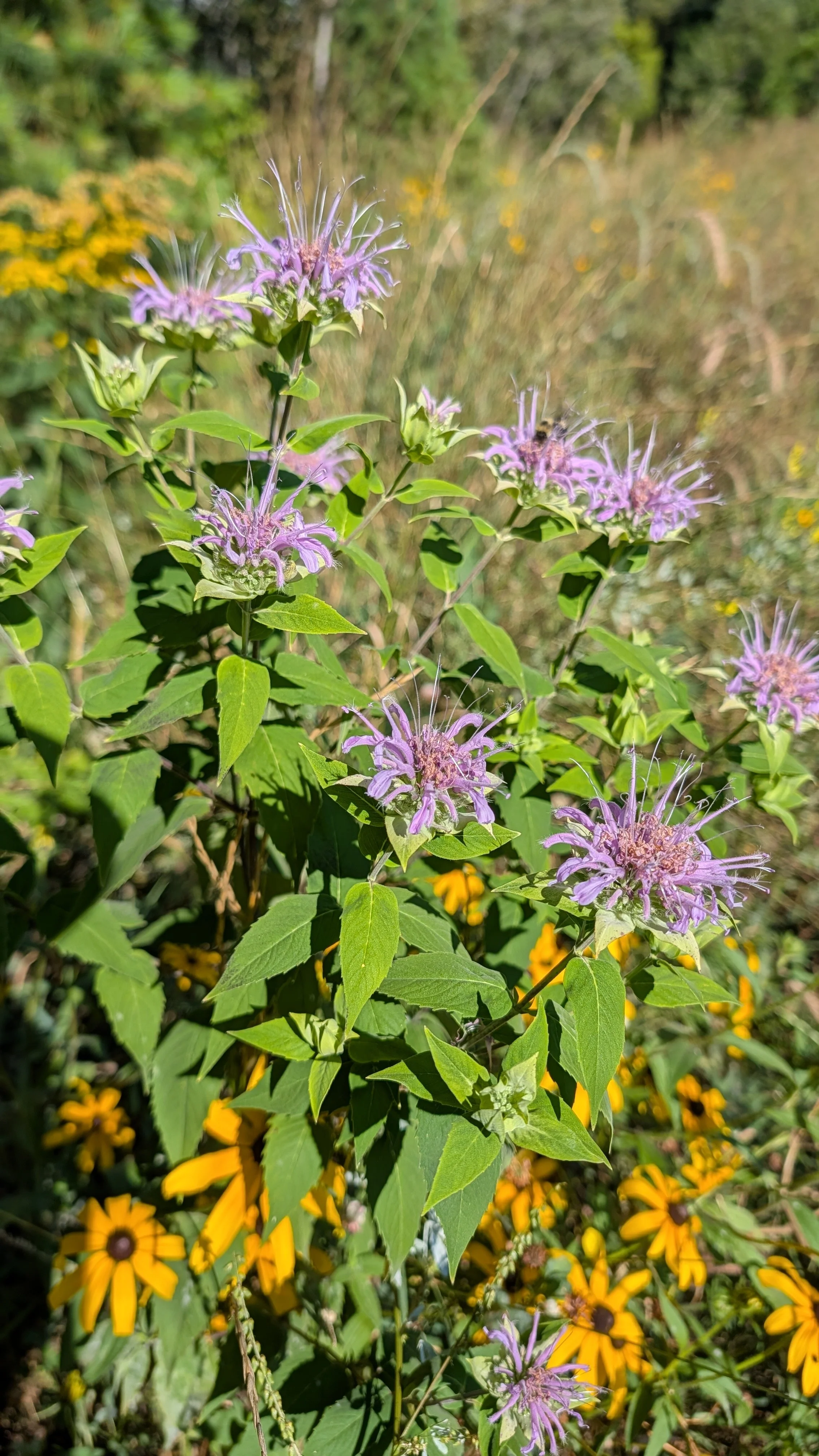
Wild bergamot (Monarda fistulosa)
Golden alexanders (Zizia aurea)
Native seed suppliers, like Prairie Moon and MNL, are increasingly stocking seed mixes designed for short-term buckthorn replacement. These mixes can be very effective. However, they should be supplemented with additional plants to increase long-term species diversity. You’ll find more information on long-term buckthorn replacements in step four.
Step 3: Maintenance and management
It’s essential to manage buckthorn regrowth, and you shouldn’t underestimate the time this task will take. Critical period cutting typically takes at least two years of biannual cutting to kill buckthorn. Complete kills can take longer for large buckthorn trees. Be sure to account for these timelines when taking on a project.
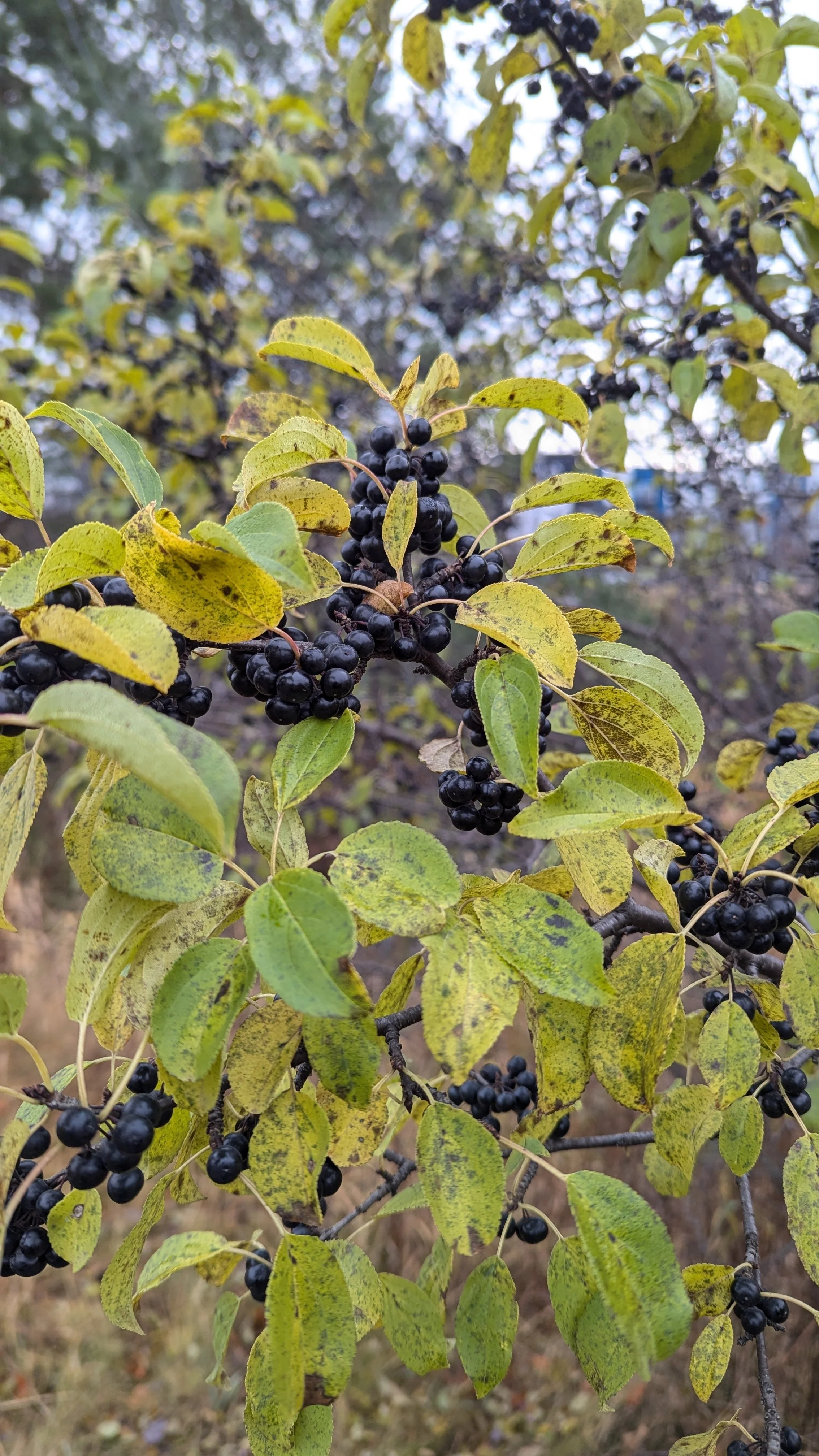
Common buckthorn (Rhamnus cathartica) is easy to spot in late fall, when the leaves remain green and clusters of dark berries dot mature shrubs.
Cutting isn’t the only task. After removing buckthorn plants and exposing the soil to sunlight, many buckthorn seedlings will emerge from the seedbank. Native plant replacements will help suppress these seedlings. However, you should anticipate pulling some buckthorn seedlings for about two to three years. After pulling buckthorn seedlings, pat the loose soil back in place to reduce the likelihood of other invasive plants colonizing disturbed soil.
Step 4: Long-term native replacements
When the buckthorn is well-managed and ruderal native plants are established, it’s time to consider your long-term habitat goals. Start by identifying the habitat that historically occupied the space. Was it grassland? Woodland? What type? Seek answers to those questions until you can make an educated guess about the habitat.
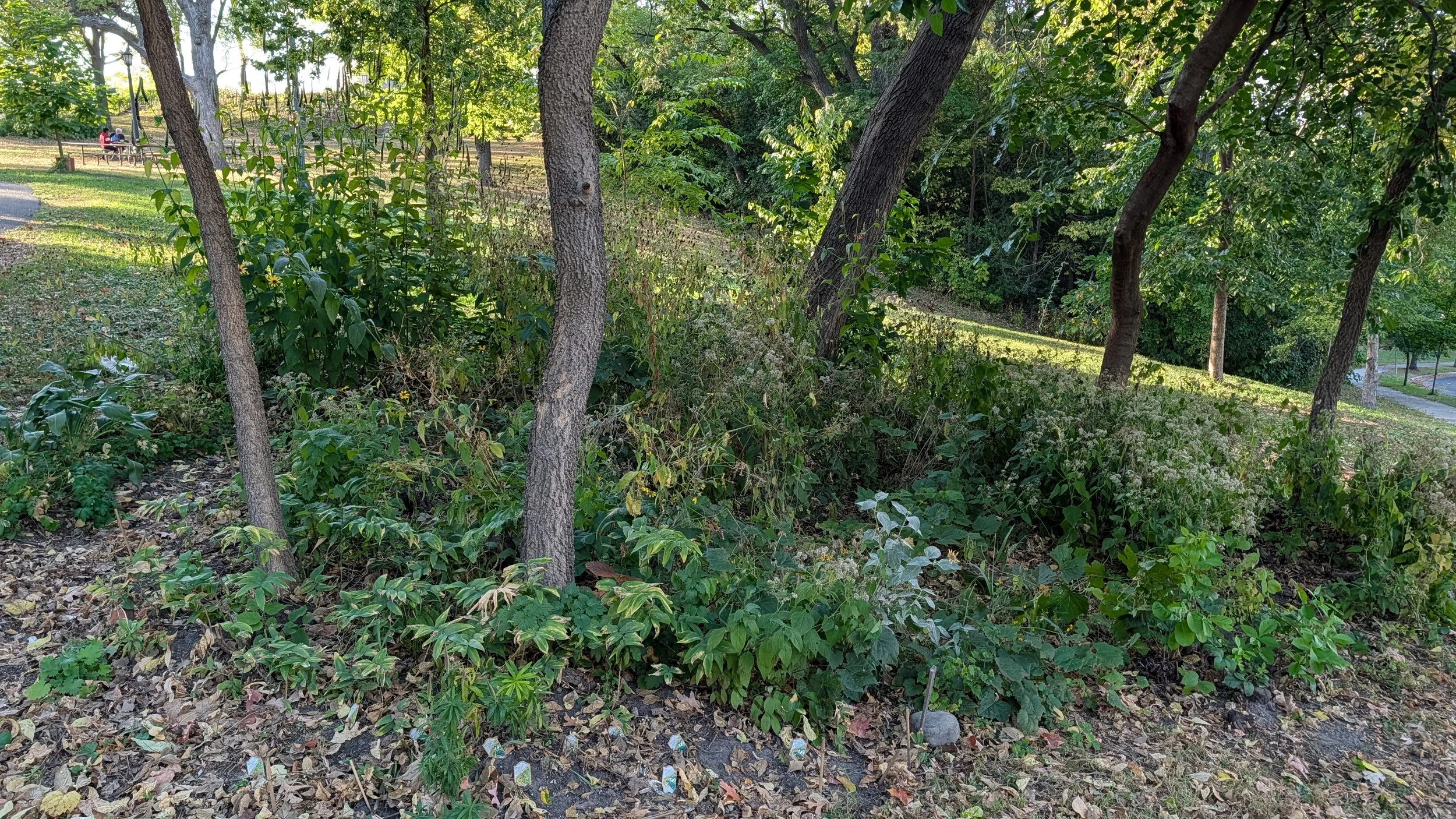
Once a buckthorn thicket, this small natural space was seeded with native plant species after critical period cutting. This photo, from October 2025, shows the growth of native plants two years after seeding.
Using the historic habitat as inspiration, select a native plant palette for long-term buckthorn replacement. Look to add long-lived perennials with big wildlife benefits. For example, leadplant (Amorpha canescens) is a slow-growing prairie shrub that can live more than 100 years. Its purple flowers are known for attracting a unique ecosystem of pollinators.
The following plants are excellent for improving the long-term diversity of habitat previously occupied by buckthorn. These species slowly form colonies, helping mature early successional habitats. Suggestions are grouped by light level. Individual plants have varying habitat and moisture requirements.
Full sun
Leadplant (Amorpha canescens)
Big bluestem (Andropogon gerardii)
Butterfly milkweed (Asclepias tuberosa)
New Jersey tea (Ceanothus americanus)
Compass plant (Silphium laciniatum)
Part sun
Lady fern (Athyrium filix-femina)
Spikenard (Aralia racemosa)
American hazelnut (Corylus americana)
Solomon’s seal (Polygonatum biflorum)
Smooth rose (Rosa blanda)
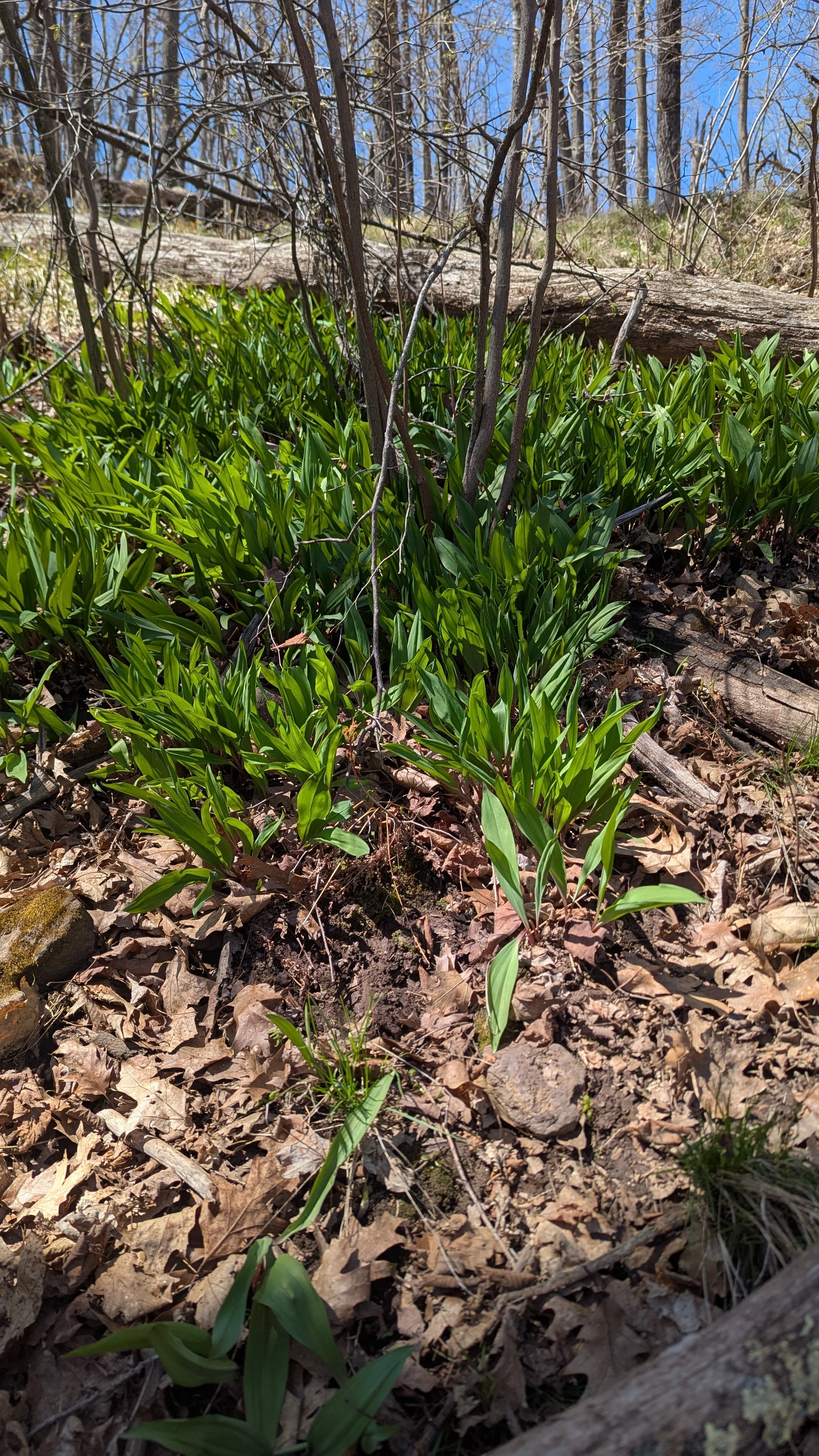
A mature colony of wild leek (Allium tricoccum), known to foragers as ramps. When foraging, clip only one flavorful leaf per plant.
Full shade
Maidenhair fern (Adiantum pedatum)
Wild leek (Allium tricoccum)
Large-flowered trillium (Trillium grandiflorum)
Bellwort (Uvularia grandifolia)
Mountain maple (Acer spicatum)
Ready to dive deeper? Here are more native plants to replace buckthorn.
Step 5: Enjoy your improved habitat!
Now’s the time to stop and stare at the flowers as you explore the space reclaimed from buckthorn. You can hone your plant ID skills as you identify native plants you’ve added to replace buckthorn. You may find more native plant species too, moving in opportunistically or emerging from a long-buried seedbank.
You can also watch for wildlife using the improved habitat. Turkey, deer, and rabbits are quick to occupy woods where dense buckthorn has been cleared. Grouse, woodpeckers, and foxes often follow. On a smaller scale, pollinators will forage on flowers flourishing under improved light conditions. You can take pride knowing that your work has had a positive effect on local ecosystems.
Are you facing a daunting project replacing invasive species with native plants? Don’t go it on your own. Get expert help from Nick’s Natives with small and mid-size ecological restoration projects. Schedule a consultation to start the process!